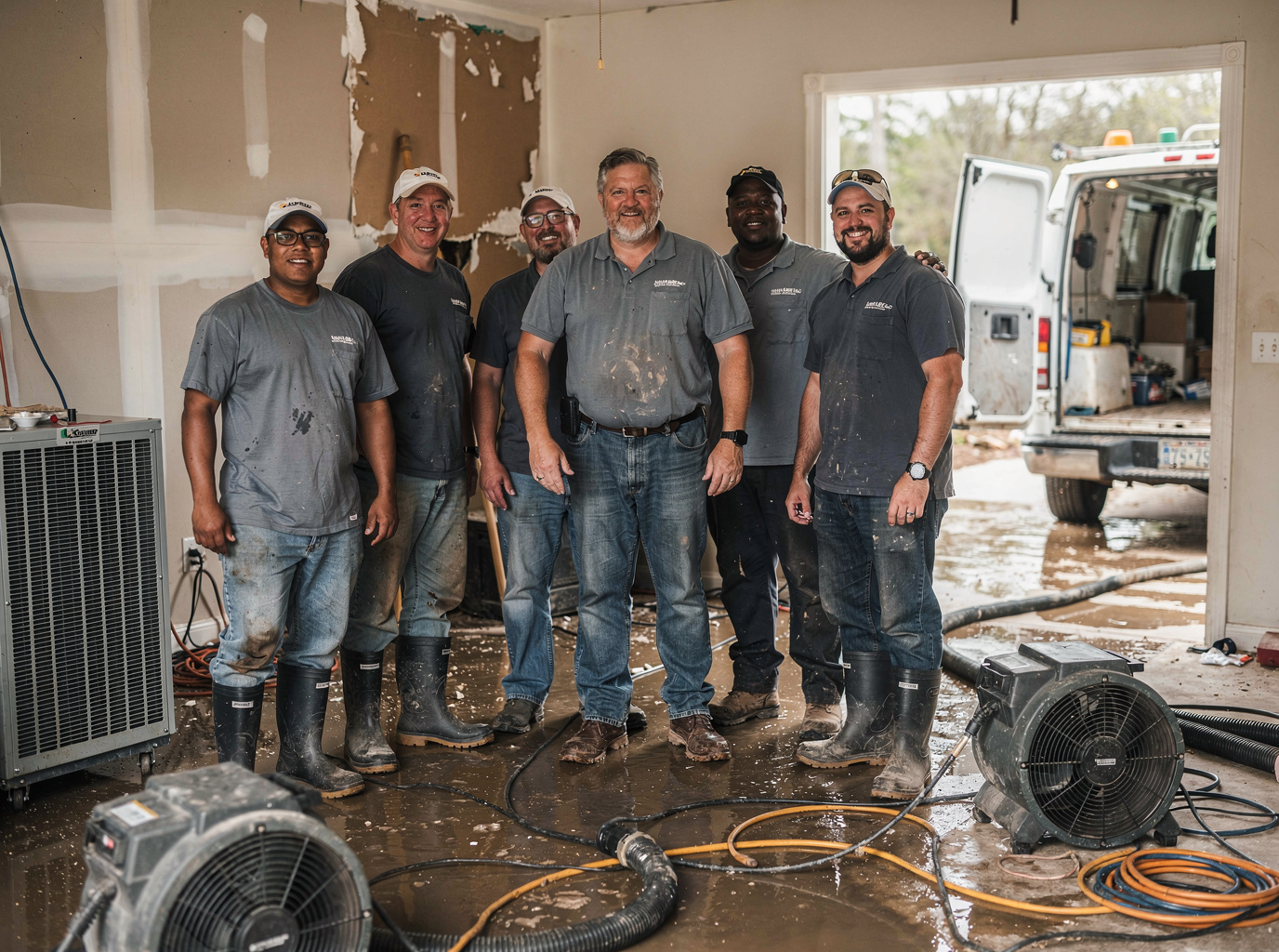
Donaldsonville sits along the Mississippi River in Ascension Parish with many older raised cottages and historic homes that sit on narrow lots close to the levee. When a pipe bursts or storm water backs up through the old clay lines, water can travel quickly under pier-and-beam foundations and into the crawl spaces common here. Our crew based at 3256 Riverbrook Ct responds directly from Baton Rouge to reach these properties before mold sets in during the humid subtropical summers.
Access in Donaldsonville often means working around tight driveways and shared alleys off Railroad Avenue or Mississippi Street. We stage equipment on the street side and use moisture meters to trace water that has wicked into the original heart-pine floors or plaster walls typical of the area. Mild winters extend drying times compared with colder climates, so we run dehumidifiers longer to protect nearby New Orleans and Lafayette residents who commute through town.
We keep standard hours Monday through Friday 8am to 6pm and Saturday 9am to 2pm so homeowners in the Donaldsonville Historic District can schedule around work and school routines at nearby Ascension Parish schools.
Around 13. Donaldsonville
We regularly work near:
- 📍Ascension Parish Courthouse
- 📍Donaldsonville Historic District
- 📍Mississippi River levee along Mississippi Street
- 📍St. Francis of Assisi Catholic Church
- 📍Railroad Avenue
Water Damage Restoration in 13. Donaldsonville — Local Notes
- •Many Donaldsonville homes pre-date modern slab foundations, so water migrates under the raised structures and requires targeted crawl-space drying rather than simple surface extraction.
- •Levee-adjacent lots along the river experience higher groundwater tables after heavy rain, lengthening the time needed to reach acceptable moisture readings before rebuilding.
- •Narrow streets and limited parking near the courthouse square mean we often coordinate equipment drop-off early to avoid blocking local traffic during restoration.
- •Historic wood siding and plaster in the district demand slower, lower-heat drying methods to prevent cracking that would require more invasive repairs later.