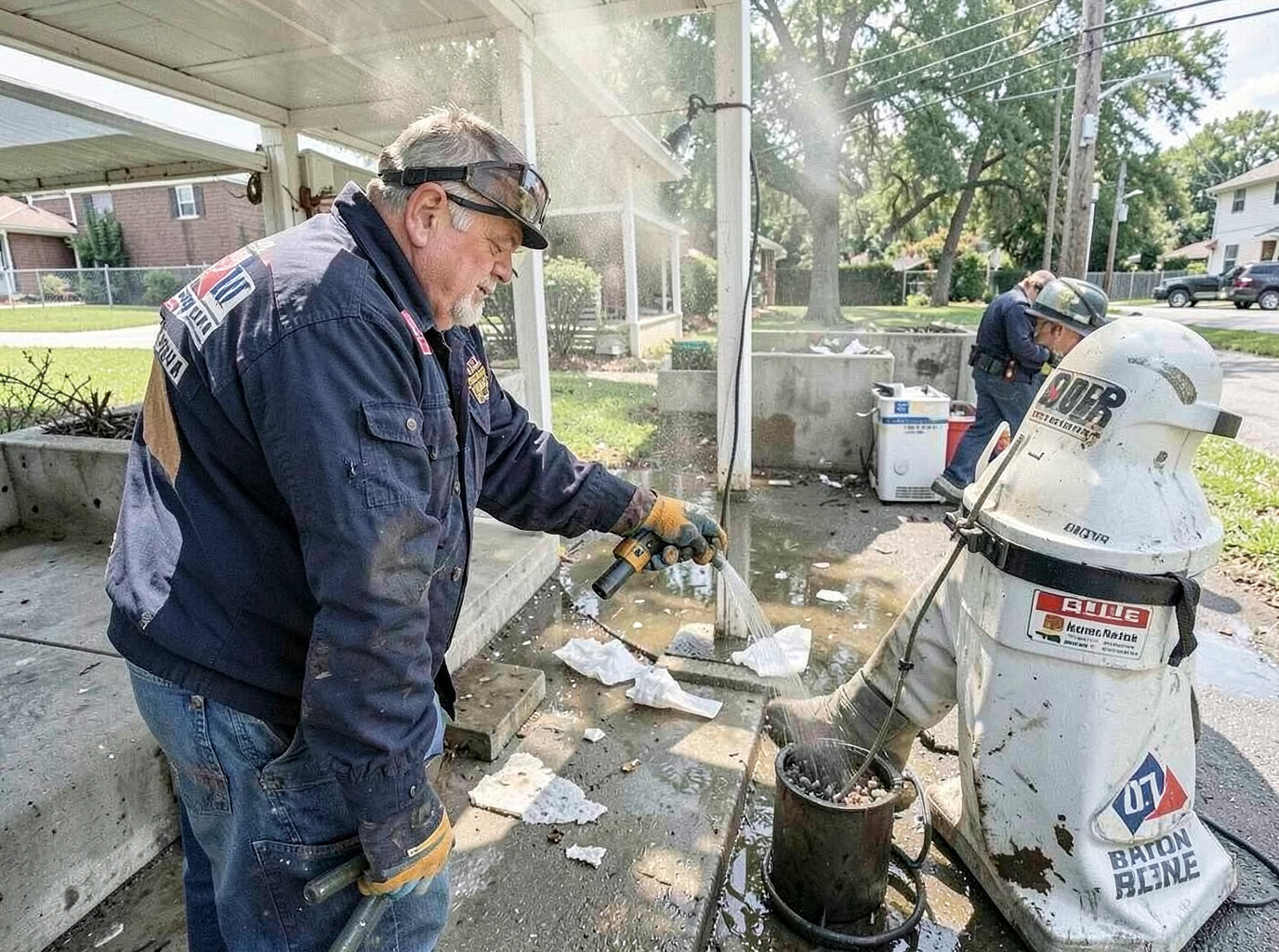
Baton Rouge's humid subtropical climate means water intrusion quickly leads to hidden mold behind plaster walls common in Spanish Town and Garden District homes built before 1950. Older framing and lath-and-plaster construction in these areas holds moisture longer than modern drywall, requiring targeted moisture mapping rather than surface drying alone. Properties near the LSU campus and Louisiana State Capitol often sit on low-lying ground that collects runoff during heavy summer storms.
Downtown and Old South neighborhoods face additional risks from aging cast-iron pipes and proximity to the Mississippi River levee system. When water enters through foundation cracks or roof leaks, it travels along joist cavities and can reach neighboring units in multi-family structures. Restoration crews must account for East Baton Rouge Parish building codes on vapor barriers and ventilation when replacing affected subfloors.
Seasonal patterns matter: mild winters reduce freeze-related pipe bursts, but prolonged humidity from late spring through fall accelerates microbial growth on hardwood floors and cabinetry. Crews working near the Baton Rouge River Center routinely deal with Category 2 gray water from street flooding that requires antimicrobial treatment before any drying equipment is placed.
Nearby cities like New Orleans and Lafayette share similar soil conditions, yet Baton Rouge's clay-heavy terrain drains slower, extending drying times by several days compared to sandier coastal soils. Technicians adjust dehumidifier placement and airflow direction based on these local soil and elevation realities.
Technician insight
In Baton Rouge the thing that catches most people out with water damage restoration is how quickly mold appears behind plaster walls once humidity spikes after a summer storm. Homes in Spanish Town and the Garden District have tight cavities that trap moisture far longer than newer builds near the LSU campus, so skipping thorough moisture mapping almost always leads to callbacks.
Garden District Crawl Space Flood
Heavy rain sent street water under a 1940s home in the Garden District. Inspection found saturated joists and insulation holding moisture against the clay soil. Extraction and targeted drying prevented mold from reaching the first-floor subfloor, and the homeowner returned to a dry, code-compliant structure within five days.
Water Damage Restoration Services We Offer
✓Emergency Water Extraction
Rapid removal of standing water from flooded basements and crawl spaces in Mid City and Garden District homes before mold sets in.
✓Structural Drying and Dehumidification
Professional drying of walls, floors and ceilings using commercial equipment suited to Baton Rouge's humid air.
✓Mold Remediation After Water Damage
Containment and removal of mold growth triggered by undetected leaks in older East Baton Rouge Parish housing stock.
✓Hardwood Floor Water Damage Repair
Assessment, drying and refinishing of cupping or buckling floors common in Spanish Town and Old South residences.
✓Sewage Backup Cleanup
Safe extraction and sanitization of contaminated water from municipal line failures near Downtown and LSU campus properties.
✓Storm and Flood Damage Restoration
Post-storm water removal and contents recovery for homes affected by heavy rainfall across East Baton Rouge Parish.
Water Damage Restoration Cost in Baton Rouge, LA
| Service | Typical Range | What Affects It |
|---|---|---|
| Water Extraction | $600–$1,800 | Higher in multi-story homes or when water reaches finished basements in Garden District properties. |
| Structural Drying | $800–$2,500 | Depends on duration needed due to local humidity levels. |
| Mold Remediation Add-On | $1,200–$3,500 | Required when growth is found behind plaster in pre-1960 homes. |
| Floor Restoration | $1,500–$4,000 | Varies with hardwood species and extent of cupping in Spanish Town residences. |
Ranges are typical for Baton Rouge, LA and confirmed with an exact written quote before any work starts.
How it works
- 1
On-Site Inspection
Technicians arrive at the property in Baton Rouge and use moisture meters to locate hidden water in walls and subfloors.
- 2
Water Removal
Pumps and extractors remove standing water from affected areas while protecting unaffected rooms.
- 3
Drying And Monitoring
Air movers and dehumidifiers run until readings confirm the structure is dry, with daily checks in humid conditions.
- 4
Restoration And Repairs
Damaged materials are replaced and finishes restored to match the original construction details of the neighborhood.
Pricing
Upfront quotes after inspection; pricing varies by water category, affected square footage and access in older homes.