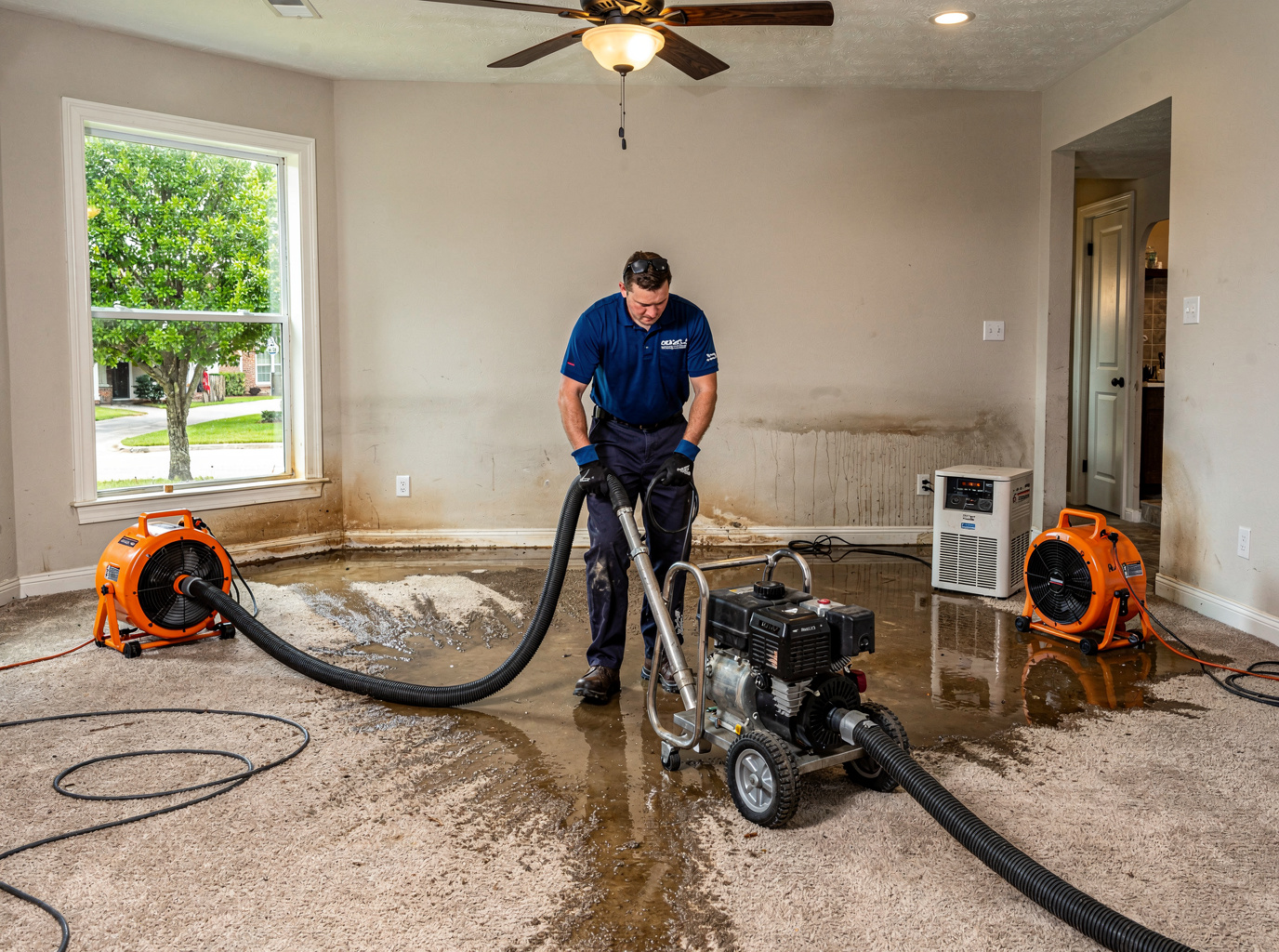
Baton Rouge homes in Mid City and the Garden District often feature older plaster and lath construction plus raised foundations that trap moisture after heavy rains common in our humid subtropical climate. Extraction crews must pull water from underfloor voids quickly or risk hidden rot that spreads to joists within days. East Baton Rouge Parish properties near the river also see occasional backflow from aging storm drains, requiring specialized pumps and antimicrobial rinses not needed in drier inland areas.
LSU Campus apartments and Spanish Town cottages frequently suffer from roof leaks during summer storms that saturate attic insulation and migrate into bedroom ceilings. Technicians use thermal imaging to map moisture behind drywall without unnecessary demolition, then run commercial dehumidifiers sized for the parish's high dew points that can keep indoor humidity above 70 percent for weeks. Failure to address this prolongs drying and raises the chance of hidden mold in wall cavities.
Downtown high-rises and Old South bungalows present different challenges because slab-on-grade construction channels water under tile or hardwood, especially after flash flooding that reaches from Lafayette corridors. Crews remove baseboards, drill weep holes, and monitor with pin meters until readings drop below 12 percent before any finish work begins. This step-by-step approach prevents callbacks that occur when shortcuts skip the parish's persistent ground moisture.
Technician insight
In Baton Rouge the thing that catches most people out with water damage restoration is how our humid subtropical air keeps moisture readings high for weeks inside the thick plaster walls of Garden District homes, so crews must keep equipment running longer than in drier parishes or risk hidden mold behind baseboards.
Mid City Bungalow After Summer Storm
Heavy rain entered through a roof valley and soaked insulation plus ceiling drywall in a 1940s Mid City home. Meters showed elevated moisture extending into two bedrooms. Extraction and targeted drying ran for five days until readings stabilized, after which new insulation and drywall were installed without further mold issues.
Water Damage Restoration Service Services We Offer
✓Emergency Water Extraction
Rapid removal of standing water from flooded basements and crawl spaces in Mid City homes using truck-mounted pumps sized for East Baton Rouge Parish rainfall volumes.
✓Structural Drying and Dehumidification
Placement of commercial air movers and dehumidifiers to pull moisture from plaster walls and hardwood floors common in Garden District properties during prolonged humid periods.
✓Mold Prevention After Water Damage
Application of EPA-registered antimicrobials and HEPA air scrubbing in Spanish Town and Old South homes to stop mold growth triggered by our subtropical humidity.
✓Drywall and Insulation Removal
Selective demolition of saturated drywall and insulation in LSU Campus rentals followed by proper disposal to eliminate hidden moisture pockets behind cabinets.
✓Carpet and Hardwood Restoration
Cleaning, drying and reinstallation of carpets plus sanding and refinishing of hardwood floors damaged by leaks near the Louisiana State Capitol area.
✓Sewage and Category 3 Cleanup
Full containment, removal and disinfection of contaminated water from backed-up drains affecting Downtown businesses and nearby river-adjacent neighborhoods.
Water Damage Restoration Service Cost in Baton Rouge, LA
| Service | Typical Range | What Affects It |
|---|---|---|
| Emergency extraction visit | $350–$750 | Varies by water depth and access in older raised foundations |
| Full drying package | $800–$2,200 | Includes equipment and daily checks for typical Mid City homes |
| Drywall and insulation removal | $1.50–$3.50 per sq ft | Price shifts with plaster versus sheetrock and disposal fees |
| Category 3 sewage cleanup | $1,800–$4,500 | Higher range for containment and disinfection in occupied spaces |
Ranges are typical for Baton Rouge, LA and confirmed with an exact written quote before any work starts.
How it works
- 1
Initial Assessment
Technician arrives at the East Baton Rouge Parish address, documents moisture levels with meters, and identifies affected materials in older plaster or slab construction.
- 2
Water Removal
Extraction equipment pulls standing water from floors and voids, followed by removal of heavily saturated contents before secondary damage sets in.
- 3
Drying and Monitoring
Air movers and dehumidifiers run continuously while daily moisture readings track progress in high-humidity conditions typical of Baton Rouge summers.
- 4
Restoration and Repairs
Rebuild of removed drywall, insulation and flooring with materials matched to the home's age and style in neighborhoods like the Garden District.
Pricing
Upfront written quotes after inspection; final cost depends on affected square footage, water category and drying duration.