2026-11-10 · Marcus Guidry
What Affects Water Damage Restoration Timelines in East Baton Rouge Parish
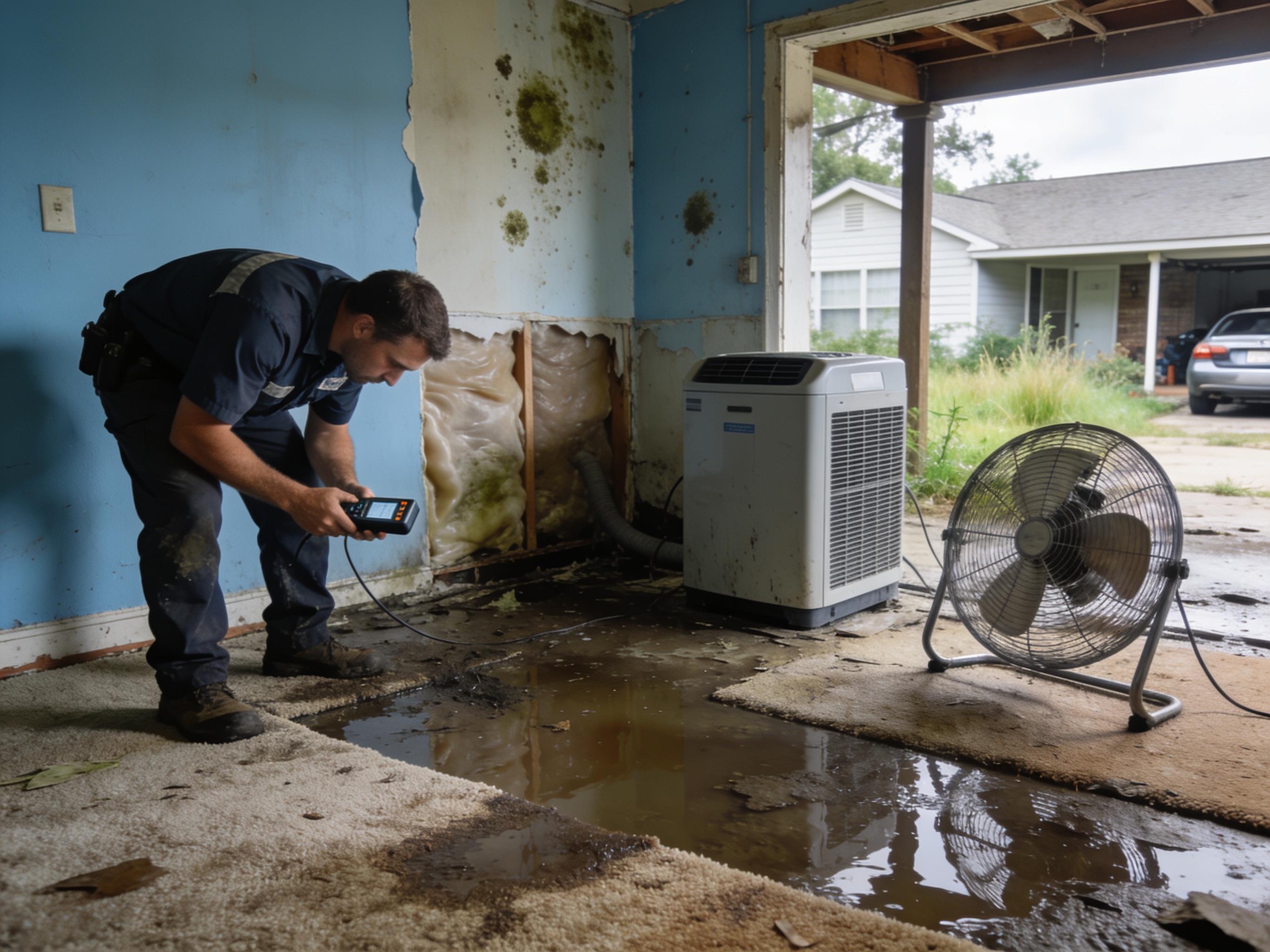
Water damage restoration timelines in East Baton Rouge Parish generally span 5 to 14 days, shaped by the volume of water, affected materials, detection speed, and seasonal humidity levels that vary across Mid City, the Garden District, and areas near the Louisiana State Capitol.
Extent and Category of Water Intrusion
The amount of water and its source set the baseline for how long extraction, drying, and repairs take. Category 1 clean water from a burst pipe might allow completion in 5 to 7 days if addressed quickly, while Category 3 contaminated floodwater from heavy rains near the Mississippi River often extends work to 10 to 14 days because of required disinfection steps. In older homes throughout Spanish Town and Old South, even small leaks can saturate plaster walls and hardwood floors that hold moisture longer than modern drywall. Technicians use moisture meters to map saturation in concrete slabs common in Downtown properties, which adds 2 to 4 days compared with raised foundations. Larger events affecting multiple rooms near the Baton Rouge River Center push timelines toward the upper end because equipment must run in sequence rather than parallel.
Building Materials and Home Age in East Baton Rouge Parish
East Baton Rouge Parish contains a wide mix of construction eras that directly affect drying rates. Homes built before 1960 in the Garden District and Spanish Town often feature lath-and-plaster walls and heart-pine flooring that absorb and release moisture slowly, adding 3 to 5 days to standard protocols. Newer construction near LSU Campus uses oriented strand board and vinyl flooring that can be dried faster but still require careful monitoring to prevent warping. Flat terrain and high water tables throughout the parish mean slab foundations stay damp longer after storms, requiring dehumidifiers to run 24 hours longer than in elevated structures. Crews frequently remove baseboards and drill small holes in walls to promote airflow, a step that takes extra time in historic districts where preserving original trim is a priority.
Impact of Local Climate on Drying Times
The humid subtropical climate brings hot summers with high ambient moisture that slows evaporation even after standing water is removed. In July and August, relative humidity above 70 percent can extend drying by 2 to 4 days compared with drier months, especially in poorly ventilated spaces common in Mid City rentals. Mild winters allow work to continue year-round but bring occasional freezes that can crack pipes in uninsulated homes near the Louisiana State University campus. After summer thunderstorms, residual moisture in soil around foundations keeps crawl spaces humid, requiring additional air movers. These seasonal patterns mean a job started in September often finishes faster than one begun in June, when outdoor conditions work against indoor drying equipment.
Detection of Hidden Moisture and Access Issues
Hidden moisture behind walls or under floors frequently adds days because it must be located before drying can finish. How to Check for Hidden Water Damage After Baton Rouge Summer Storms outlines infrared scanning techniques that crews use in Spanish Town homes where multiple layers of renovation hide leaks. Limited access in tight Downtown alleys or crowded LSU Campus apartments slows equipment placement and daily monitoring visits. Properties in the Garden District with mature landscaping often have overgrown yards that block exterior drying setups, adding another day or two. Early detection with thermal cameras and pin meters prevents mold growth that would otherwise restart the entire timeline after the initial 72-hour window.
Coordination With Related Services
Once drying is complete, many properties move directly into repair phases that can extend overall timelines by several days. Water Damage Repair often follows immediately in homes where flooring or drywall must be replaced after saturation. In flood-prone zones near Denham Springs, coordination with Water Damage Restoration teams ensures permits and material deliveries align without gaps. Older homes in Old South sometimes require custom milling for replacement trim, which adds 3 to 5 days beyond standard restoration. These handoffs are planned from the first inspection to keep total time within the 5-to-14-day range rather than stretching into weeks.