2026-11-10 · Marcus Guidry
How to Check for Hidden Water Damage After Baton Rouge Summer Storms
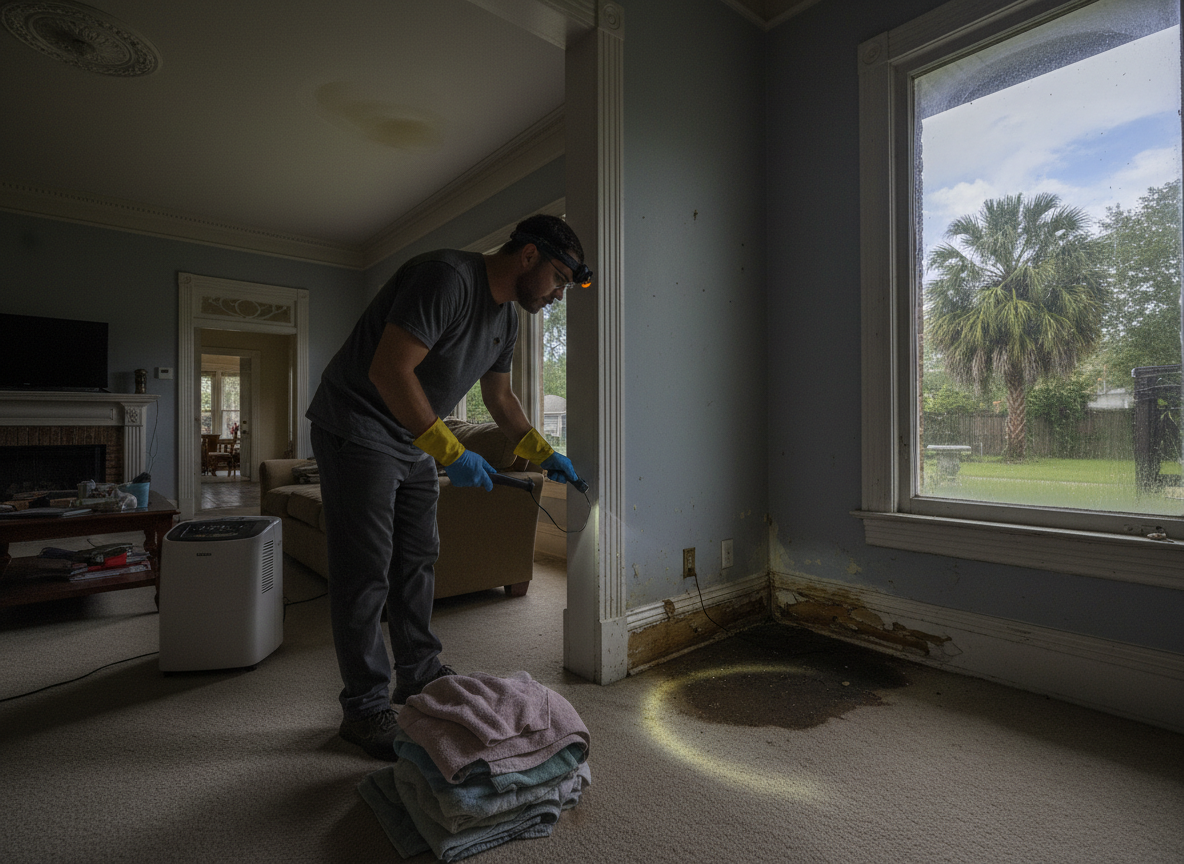
Summer storms in Baton Rouge's humid subtropical climate often leave hidden water damage in older homes across Mid City, Garden District, Spanish Town, and Old South. Start by checking attics and crawl spaces within 48 hours of heavy rainfall, looking for discoloration or damp insulation around roof penetrations common in East Baton Rouge Parish properties built before 1980.
Inspecting Attics and Ceilings After Storms
Examine attic insulation and rafters for dark stains or soft spots where water from summer downpours pools near chimneys or vents. In Garden District homes with steep roofs, check around HVAC units because condensation mixes with storm runoff and travels along joists into living spaces. Use a moisture meter on drywall ceilings below; readings above 15 percent indicate trapped water that can lead to mold within 72 hours in the local humidity. Walk the attic floor carefully and note any sagging near the Louisiana State Capitol area homes where older plaster cracks first. If moisture appears near electrical boxes, turn off power and document the spots for professional assessment. This process reveals issues before they reach LSU Campus rentals or Downtown apartments with shared walls.
Checking Walls and Flooring in Local Homes
Scan baseboards and lower walls in kitchens and bathrooms for buckling or bubbling paint, especially in Mid City shotgun houses where slab foundations meet frequent rain. Lift carpet corners in Old South properties and press a paper towel against subfloors to test for dampness that spreads from exterior doors during storms. In Spanish Town's historic structures, pay attention to hardwood floors near windows because the mild winters allow moisture to linger without freezing. Measure wall moisture at multiple heights; consistent readings above 20 percent signal hidden leaks from gutters overwhelmed by Baton Rouge's intense summer rainfall. Compare findings to nearby New Orleans or Lafayette homes where similar clay soils retain water longer, making East Baton Rouge Parish jobs require extra drying time.
Evaluating Basements and Crawl Spaces
Crawl spaces under homes in East Baton Rouge Parish often collect water from poor drainage around foundations during summer storms. Shine a flashlight along sill plates for white residue or wood softening, common in Garden District raised cottages. Check sump pumps and French drains if present, as heavy rain can overwhelm systems in areas like Downtown near the Baton Rouge River Center. Use a hygrometer to confirm relative humidity stays below 60 percent; higher levels promote mold growth on joists within days. Document any standing water near plumbing penetrations before it migrates to adjacent neighborhoods such as Zachary or Denham Springs.
When to Call for Water Damage Restoration
If moisture readings remain elevated after 72 hours or visible mold appears, contact specialists for targeted Water Damage Restoration rather than DIY fixes. Older homes in Spanish Town and Mid City frequently need full drying of cavities that standard fans miss. Review the related guide on preparing older Baton Rouge homes for hurricane season flooding to understand seasonal patterns better. For timelines specific to East Baton Rouge Parish jobs, see what affects water damage restoration timelines in East Baton Rouge Parish. Professional teams operating from 3256 Riverbrook Ct can assess properties Monday through Friday 8am–6pm or Saturday 9am–2pm when hidden damage threatens structural integrity.